04
11
2026
By Eve Painter
What is the Employment Rights Act 2025?
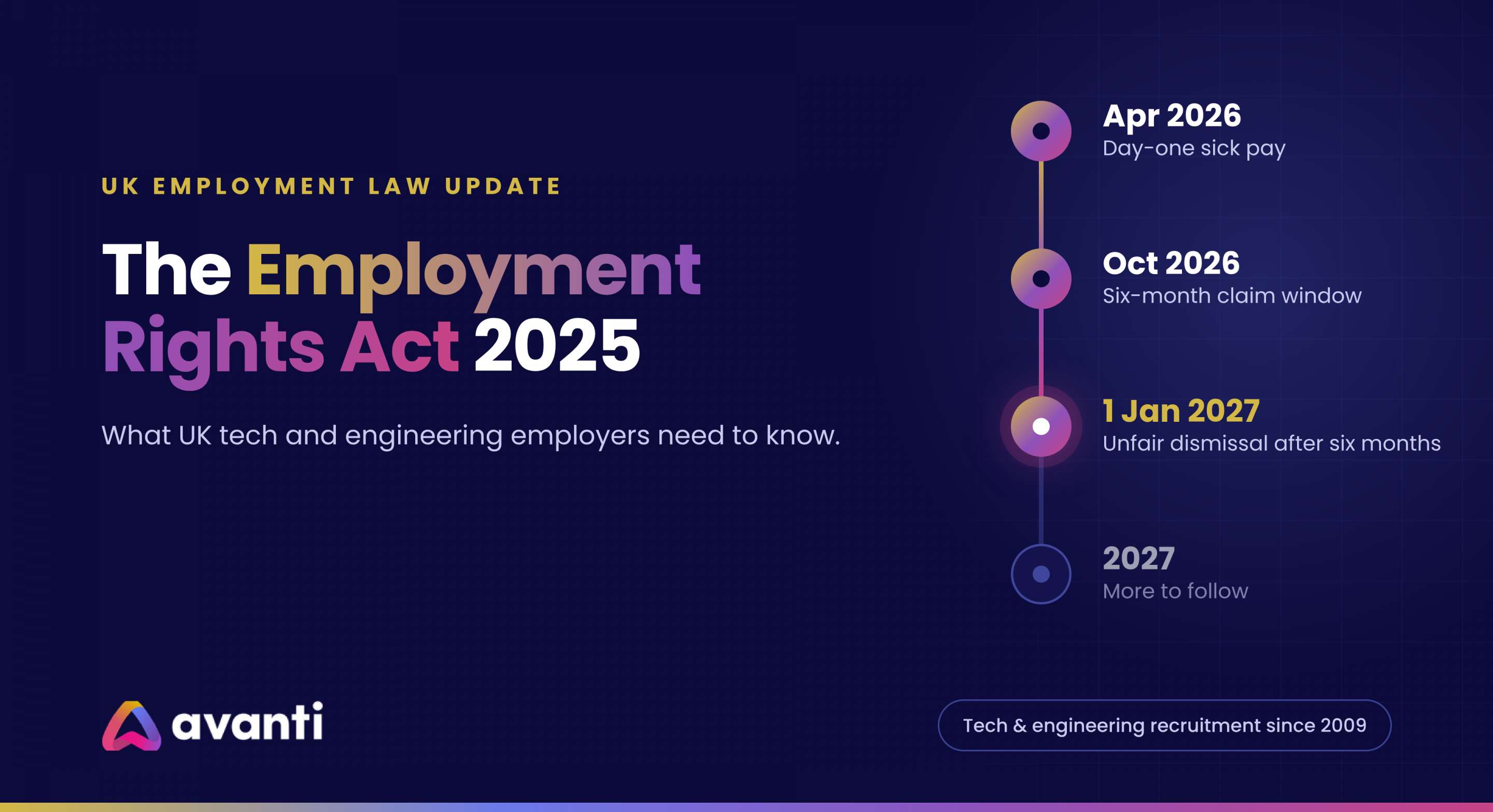
Back to BlogsThe Employment Rights Act 2025 is the biggest change to UK employment law in decades. It became law on 18 December 2025 and strengthens worker protections across sick pay, family leave, unfair dismissal, harassment, zero-hours contracts and enforcement. Its measures are coming into force in stages through 2026 and 2027, mostly on set dates in April and October. Some of it already applies.
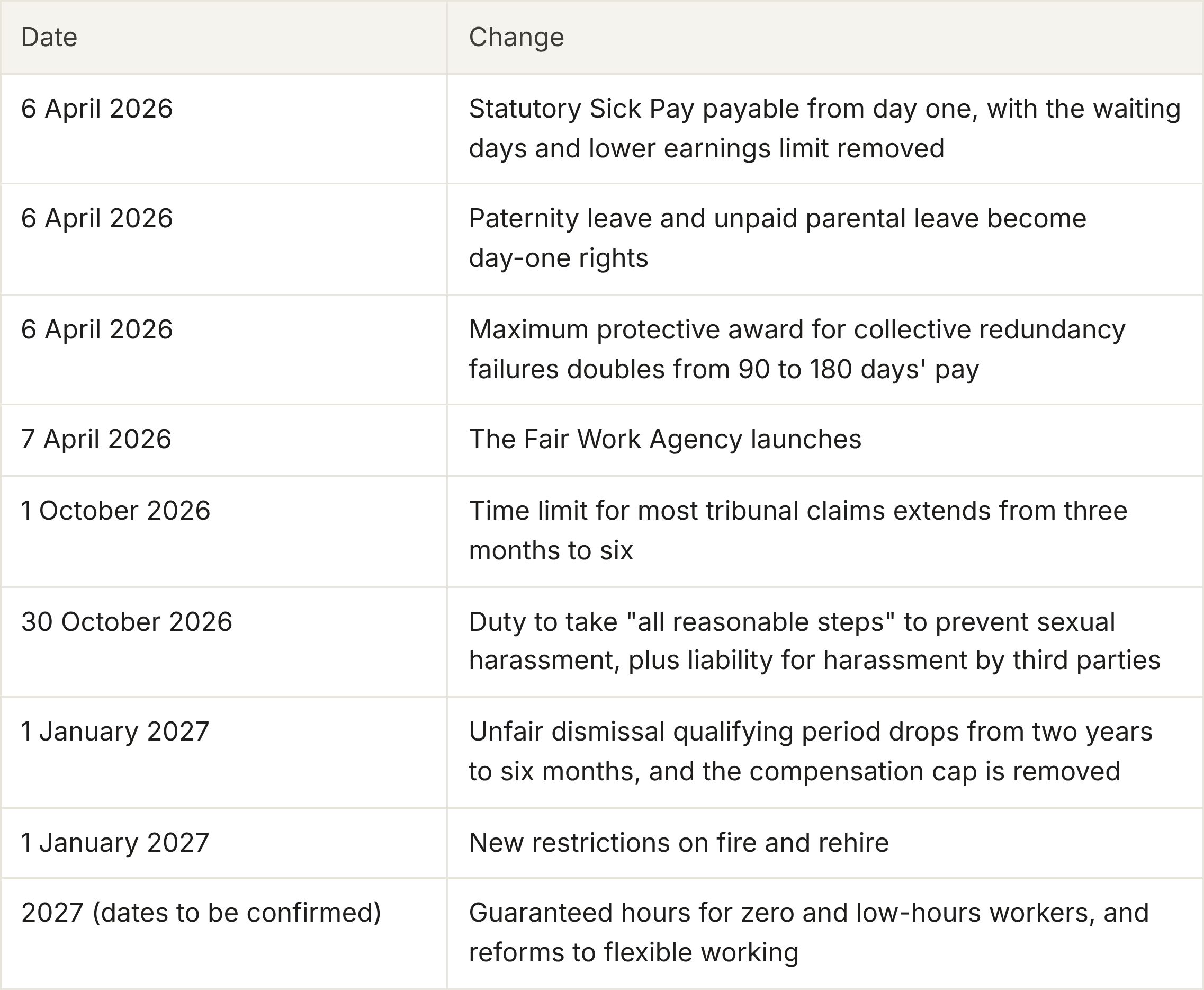
Employment Rights Act timeline: key dates
What changed in October 2026?
The six-month time limit covers most claims, including unfair dismissal and discrimination, where the act or dismissal happened on or after 1 October. A decision you make today can be challenged much later than before, so records of performance conversations, hiring decisions and dismissals need to be kept and easy to find.
From 30 October 2026, you're also liable if a client, customer or supplier harasses your staff, unless you can show you took all reasonable steps to prevent it. That matters for engineers who work on client sites or in customer-facing roles.
What changes on 1 January 2027?
Until now, the compensatory award for unfair dismissal was capped at the lower of £118,223 or 52 weeks' gross pay. From January, tribunals will base it on the employee's actual financial loss.
The six-month rule applies to existing staff, not only new hires. Anyone with six months' service on 1 January 2027 is protected that day, which means anyone who started on or before about 1 July 2026.
Unfair dismissal will not become a day-one right. The government dropped that plan during the bill's passage. Protection against discrimination and automatically unfair dismissal was already day-one and stays that way.
Under the new fire and rehire rules, dismissing someone for refusing a change to their contract terms will be automatically unfair in most cases.
What does the Employment Rights Act mean for hiring engineers?
From 2027, you have six months to put a bad hire right. That matters more in tech than most sectors. Senior engineers, engineering managers and specialists in AI, FPGA and embedded systems often earn over £100,000, and anyone who would take a long time to find a similar role can claim for the full loss.
A six-month probation period now lines up with the qualifying period. Set clear objectives in writing in week one, review progress formally at the halfway point & make the decision before month six rather than letting it drift.
The time to find out whether someone fits is before the offer. Agree what good looks like for the role before you start interviewing, assess the things that predict success in the job, and take proper references.
If you have concerns about anyone who started on or before about 1 July 2026, raise them now, properly and on record.
Contract and interim hires may be worth another look for roles with uncertain scope or a fixed end date.
Right to work checks: a separate change from October 2026
This one often gets lumped in with the Employment Rights Act, but it comes from a different law: section 48 of the Border Security, Asylum and Immigration Act 2025.
For people who started work on or after 1 October 2026, right to work checks are no longer just for employees. They now extend to workers, individual sub-contractors and people matched to work through online platforms. Businesses further up a supply chain can also be fined if someone lower down fails to check. How this applies to a contractor depends on how they're engaged, so check your own arrangements.
The civil penalties have not changed: up to £45,000 per illegal worker for a first breach and £60,000 for a repeat breach. These amounts have applied since February 2024.
How Avanti can help
Avanti has recruited tech and engineering talent for UK startups and scaleups for 17 years. If you're rethinking how you hire ahead of January 2027, contact the team on 0118 402 4664 or hello@avantirec.com.
Sources
• Acas: Employment Rights Act 2025, harassment law changes
• CIPD: unfair dismissal changes under the Employment Rights Act 2025
• Bird & Bird: six months for protection, no cap on compensation
• DLA Piper: April 2026 changes coming into force
• Lewis Silkin: longer time limits for tribunal claims
• Fox Williams: right to work checks are changing
This article is general information and not legal advice. Last updated October 2026.
13
11
2026
Nobody knows how to hire right now, so we asked four founders what they're doing
Regardless of what you think of AI it is safe to say that it has completely changed the job market and how companies hire. There isn't a settled playbook on how to interview or how to hire which can make it hard for everyone. So we asked four peop
11
11
2026
How to hire data centre engineers in the UK when AI hardware keeps changing
A data centre takes years to plan, approve and build. The AI hardware that goes inside it changes every year or two. NetZero Events asked the obvious question in a recent piece: are we building for AI that won't exist? Their answer for the buildin
02
11
2026
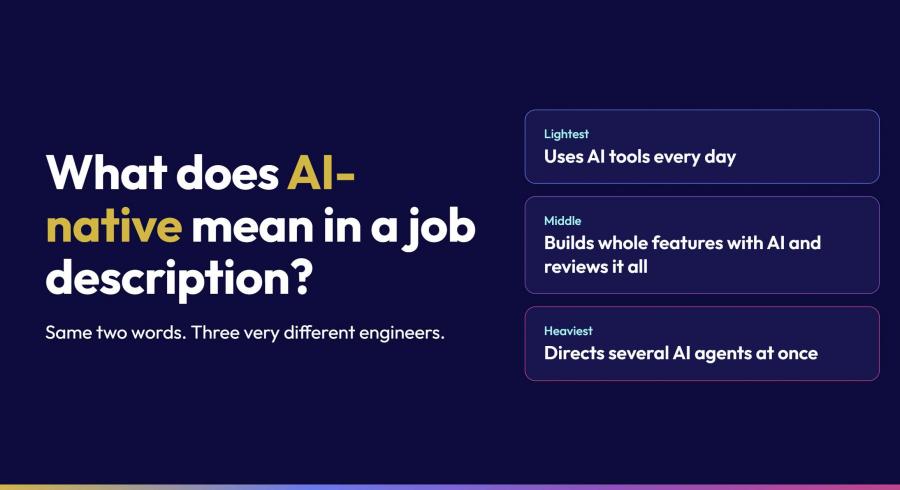
What does AI-native mean in a job description?
Quick answer: In most UK job ads, “AI-native” means the company wants someone who uses AI tools as a normal part of how they work every day, not now and then. In practice it can mean anything from “uses Copilot” to “directs several AI agents and rare