13
11
2026
By Eve Painter
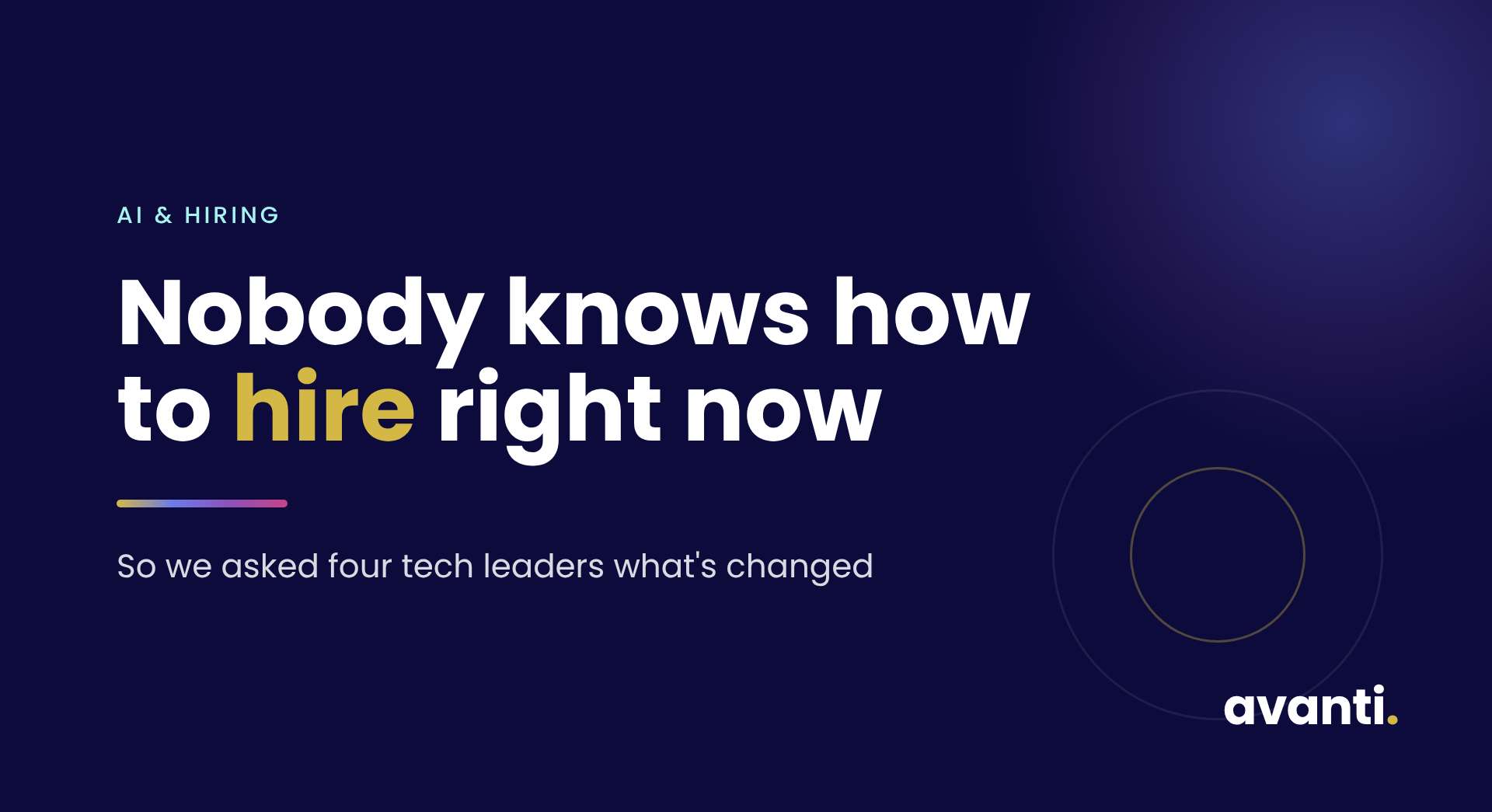
Nobody knows how to hire right now, so we asked four founders what they're doing
Back to BlogsRegardless of what you think of AI it is safe to say that it has completely changed the job market and how companies hire. There isn't a settled playbook on how to interview or how to hire which can make it hard for everyone.
So we asked four people responsible for hiring what has actually changed, what they're looking for now and where AI is making things harder: Pierre Drezet, Director of Inx Systems; Ben Jones, Director of IC Designs at Intrinsic; Christian Harrison, VP Engineering at Ceto; and Tom Greenlees, CEO of Intelligent Core.
1. What's one thing your team does differently this year because of AI?
Christian Harrison: "Literally everything. I don't think we have a single process from sales through to engineering and product development that isn't touched by it."
Ben Jones: "We've definitely been able to take some shortcuts with building e.g. scripts and web interfaces for internal tools. We don't really do things differently, just do the same things a fair bit faster."
Tom Greenlees: "We've stopped treating first drafts as a human job. Proposals, technical documentation, partner briefs and investor materials all start with AI, and my team spend their time on judgement: what's true, what matters to this client, and what we're willing to commit to."
Pierre Drezet: "We are documenting much more effectively, using AI to catch up on historic documentation debts, improve and validate existing documentation."
Christian says everything has changed & Ben says almost nothing has. Nobody can give you a hiring process that fits every company & is a reminder that AI adoption looks different in every business.
2. What do you look for in a hire now that you didn't two years ago?
Christian Harrison: "Agentic working practices. How they prompt / work with an AI. How they handle their permissions/affordances. What is their trust appetite for AI code and how do they increase it. I no longer test for syntax and DSA."
Tom Greenlees: "Judgement over output. Anyone can now produce a polished document in minutes, so volume isn't a differentiator. I want people who can tell when an AI answer is wrong, ask better questions, and take ownership of the result."
Ben Jones: "I wouldn't say it's changed that much. But I certainly look for evidence of 'this candidate not being an AI' in a way that it never occurred to me that I would have to do two years ago!"
None of them mentioned a language or a framework. Christian and Tom both want to know how someone treats AI's work: how far they trust it and whether they can tell when it's wrong. Even Ben, who says little has changed, is now checking there's a real person behind the application.
3. Where has AI made your work more difficult?
Christian Harrison: "Now, because everything can be built, the difficult question is asking what should be built. There is also more cognitive load as we can build software / systems 3-5x faster so it's hard to keep a consistent mental map of all of them."
Pierre Drezet: "It can produce more code and utilities than necessary, and most importantly can leave projects with no human or machine understanding them sufficiently towards the end of projects to judge the risks of launch in the wild."
Tom Greenlees: "Signal versus noise. Every inbox, pitch and application now looks competent, which makes it harder to spot genuine insight."
Building faster doesn't automatically mean building better. Christian is struggling to keep track of what's been built, and Pierre has seen projects reach launch with nobody understanding them well enough to judge the risk. If AI makes work quicker to produce, the person checking it matters more, and that's who you need to find in an interview
4. What's your favourite AI tool right now, and why?
Tom Greenlees: "Claude. I use it as a thinking partner more than a writing tool. It saves me hours, but more importantly it sharpens my thinking before I walk into the room."
Christian Harrison: "Our internal workspace that is a Claude Code wrapper. It gives us a legit >3x boost to engineering capacity."
Pierre Drezet: "Claude Code. Just familiarity. My view is that if you need very complex AI (like Fable) for 95% of software development tasks then you are probably doing something wrong."
Ben Jones: "I'm not really using many AI tools deliberately, although I do like the current state of reverse image search and audio/image transcription as timesavers."
Three of the four picked some form of Claude, but for different reasons. Their answers show that knowing which tools to use matters less than understanding how to get value from them.
5. What makes an application stand out to you?
Tom Greenlees: "Specificity. Show me you understand what we actually do and the problem we solve for operators. Tell me one concrete thing you'd bring or improve. If it reads like it could have been sent to fifty companies, it probably was."
Christian Harrison: "Come through a trusted recruiter. Have an edge in their profile. Make sure they absolutely do not send a generic AI written intro on LI. These go straight in my 'no pile'."
Pierre Drezet: "Applicants that have built something on their own, deployed it and shown some ability to critique what they have done. It may be AI generated, but can also provide an indication that a candidate knows what good looks like."
Ben Jones: "I quickly dismiss applications and CVs that are poorly structured, contain errors that a spelling or grammar checker would have found, or which make claims that sound phoney or exaggerated. Just be straightforward and accurate and you're 80% of the way there!"
Tom's team starts its documents with AI, yet a generic AI intro goes straight in Christian's no pile. The issue isn't AI, it's that nobody has thought about what they're sending. Hiring managers need to check for that thinking, because the application can't show it any more.
So what does this mean for hiring?
All four are looking for the same thing in different words: someone who can think about the work, not just produce it. We call this judgement.
AI has made work easier to produce & harder to judge. For candidates this means make sure you explain how and why you've built something in interviews.
If you're interviewing do you have a reliable way to assess judgement?
If your interview process just checks what someone can produce, add something that shows how they think.
11
11
2026
How to hire data centre engineers in the UK when AI hardware keeps changing
A data centre takes years to plan, approve and build. The AI hardware that goes inside it changes every year or two. NetZero Events asked the obvious question in a recent piece: are we building for AI that won't exist? Their answer for the buildin
04
11
2026
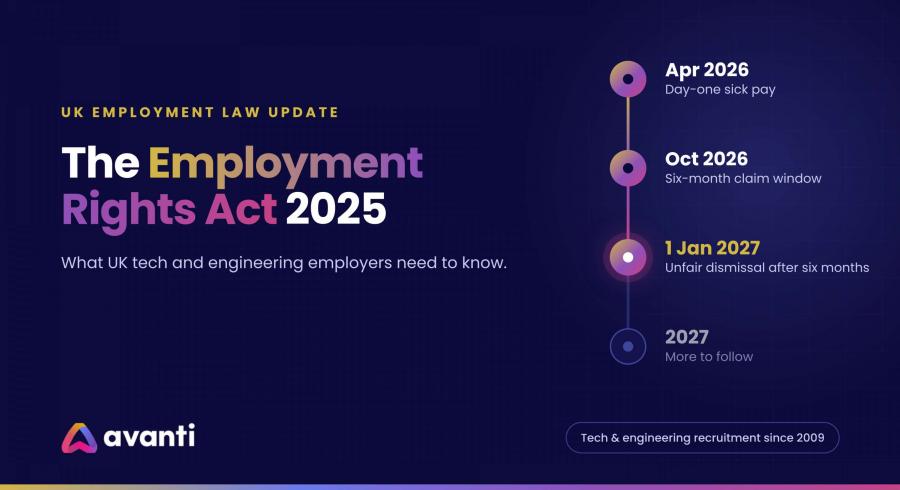
What is the Employment Rights Act 2025?
The Employment Rights Act 2025 is the biggest change to UK employment law in decades. It became law on 18 December 2025 and strengthens worker protections across sick pay, family leave, unfair dismissal, harassment, zero-hours contracts and enforceme
02
11
2026
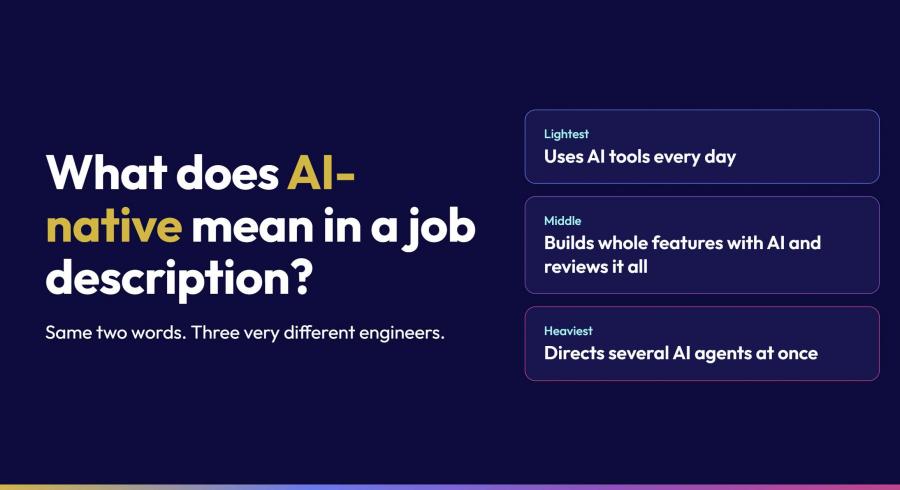
What does AI-native mean in a job description?
Quick answer: In most UK job ads, “AI-native” means the company wants someone who uses AI tools as a normal part of how they work every day, not now and then. In practice it can mean anything from “uses Copilot” to “directs several AI agents and rare