11
11
2026
By Eve Painter
How to hire data centre engineers in the UK when AI hardware keeps changing
Back to BlogsA data centre takes years to plan, approve and build. The AI hardware that goes inside it changes every year or two. NetZero Events asked the obvious question in a recent piece: are we building for AI that won't exist?
Their answer for the building is to lock in the things that are expensive to change and keep everything else flexible. We think the same question applies to the people you hire to build and run it. Most data centre job specs are written around this year's kit. The engineer you hire will still be there when that kit gets ripped out.
The UK numbers
The UK is building faster than it can staff.
• The UK pipeline is around 13,500MW, about 7.5 times the capacity live today (Savills).
• 231MW of IT capacity was delivered in 2025, a record (Savills).
• The government wants at least 6GW of AI-capable capacity by 2030, backed by AI Growth Zones in Culham, Teesside, Newcastle and North & South Wales.
• Building is moving north. The M62 corridor has the biggest pipeline at 3.3GW (Barbour ABI data via Computer Weekly).
• In late March 2026 there were 9,862 UK vacancies on LinkedIn mentioning data centres.
• UK operators expect 18.74% of their workforce to retire, which is 4,554 roles out of an estimated 24,300 direct data centre jobs (Onnec).
• 53% of operators worldwide say they struggle to find qualified candidates, up from 46% a year earlier (Uptime Institute).
So more sites, further from London, with more people leaving and fewer people to replace them. Every operator & contractor is fishing in the same small pool.
Your job spec is already out of date
New AI builds need higher power densities, heavier floor loadings and often liquid cooling. Five years ago most of that was niche. Today it's on every spec.
The problem is how those specs get written. A hiring manager asks for five years on a specific liquid cooling system that has only been widely used for two. The pool of people who match is tiny, so the role sits open for months. By the time someone is hired, the next refresh is on the way and the thing you hired them for is being replaced.
You can't hire for the exact kit. You can hire for someone who has been through a change of kit and kept the site running.
AI-ready vs AI-adaptable
The NetZero piece draws a line between a facility that is "AI-ready" (it suits the planned workload) and one that is "AI-adaptable" (it can take major hardware changes without being rebuilt). The same line works for engineers.
An AI-ready engineer has done exactly what's on your spec. An AI-adaptable engineer has lived through a migration, a refresh or a redesign and knows what to keep, what to replace and how to do it without taking the site down.
The article says the first major hardware refresh is the real test of a building. It's also the real test of the team you hired to run it.
Where adaptable engineers come from
Operators are already recruiting from outside the sector, and they're right to. The best places to look are industries where systems are critical, downtime is expensive and change is tightly controlled:
• Nuclear and power, for electrical engineers used to high-voltage systems and strict safety cases.
• Defence and aerospace, for engineers used to long programmes where requirements change mid-build.
• Manufacturing, for mechanical and controls engineers who run plant that can't stop.
• Cloud and infrastructure, for the operations side. UK employers report skills gaps in networking (40%), cyber security (44%) and data, AI & automation (33%), all of which a modern data centre needs.
With the pipeline moving to the M62 corridor, the North East and Scotland, a lot of this talent already lives near the new sites. It just doesn't have "data centre" on its CV yet.
What to ask in an interview
Ask about change:
• Tell me about a time the system you were running changed under you. What did you keep and what did you replace?
• How would you plan for equipment you haven't seen yet?
• What's the most expensive thing you've seen built in a way that couldn't be changed later?
Good answers talk about the next refresh, not just the current one. They mention isolating work so the rest of the site keeps running. They can explain it simply to someone who isn't an engineer.
FAQ:
How many data centre jobs are there in the UK?
Around 24,300 people work directly in UK data centres, according to Onnec's estimate. techUK put the wider figure at 43,500 jobs supported across the UK economy.
Why is it hard to hire data centre engineers in the UK?
The build pipeline is growing much faster than the workforce, a large share of current staff are close to retirement, and AI builds need skills (high-density power, liquid cooling) that few people have years of experience in.
Where are new UK data centres being built?
London still holds most of the live capacity, but the biggest pipeline is now on the M62 corridor, with AI Growth Zones in Oxfordshire, Teesside, Newcastle and North & South Wales.
Can engineers from other industries move into data centres?
Yes. Electrical, mechanical and controls engineers from nuclear, power, defence and manufacturing bring the reliability and change control mindset data centres need. The specific kit can be learned.
What skills do AI data centres need?
High-density power distribution, liquid cooling, networking, cyber security and automation, plus the judgement to plan for hardware that will change during the life of the building.
Hiring for a data centre build?
Avanti recruits electrical, mechanical, infrastructure and cyber engineers across the UK, including from the industries above. Reach out to Cameron on 07576 544139 or C.Davis@avantirec.com
Sources
• NetZero Events: AI data centre design, are we building for AI that won't exist?
• Savills: UK data centre building capacity H1 2026
• Computer Weekly: UK government's 2030 datacentre capacity targets look shaky
• CBRE: UK real estate market outlook 2026, data centres
• Data Centre Review: The data centre boom will stall without a skills plan
• Data Centre Magazine: How data centre companies could resolve a workforce shortage
• Colt DCS: AI growth vs workforce reality
13
11
2026
Nobody knows how to hire right now, so we asked four founders what they're doing
Regardless of what you think of AI it is safe to say that it has completely changed the job market and how companies hire. There isn't a settled playbook on how to interview or how to hire which can make it hard for everyone. So we asked four peop
04
11
2026
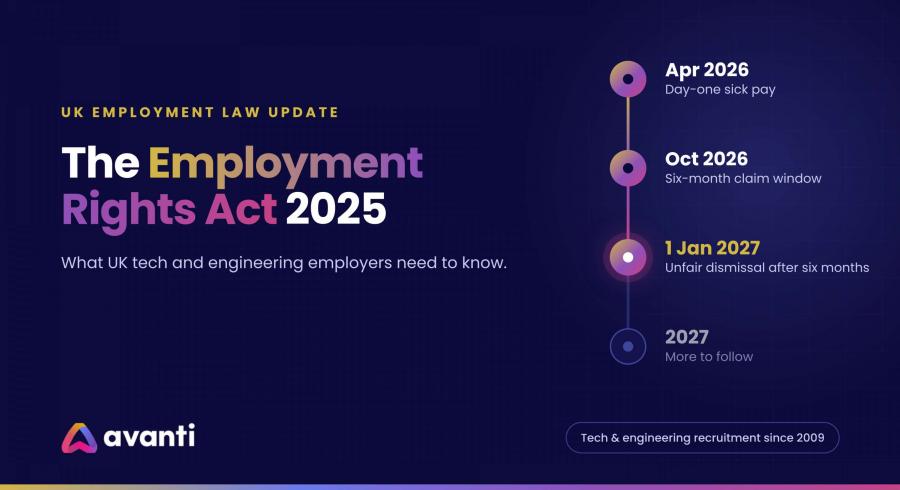
What is the Employment Rights Act 2025?
The Employment Rights Act 2025 is the biggest change to UK employment law in decades. It became law on 18 December 2025 and strengthens worker protections across sick pay, family leave, unfair dismissal, harassment, zero-hours contracts and enforceme
02
11
2026
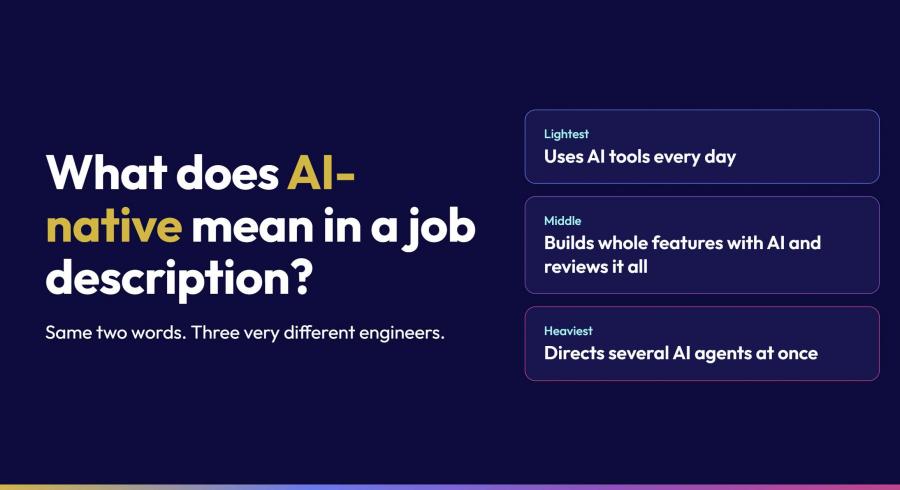
What does AI-native mean in a job description?
Quick answer: In most UK job ads, “AI-native” means the company wants someone who uses AI tools as a normal part of how they work every day, not now and then. In practice it can mean anything from “uses Copilot” to “directs several AI agents and rare