02
11
2026
By Eve Painter
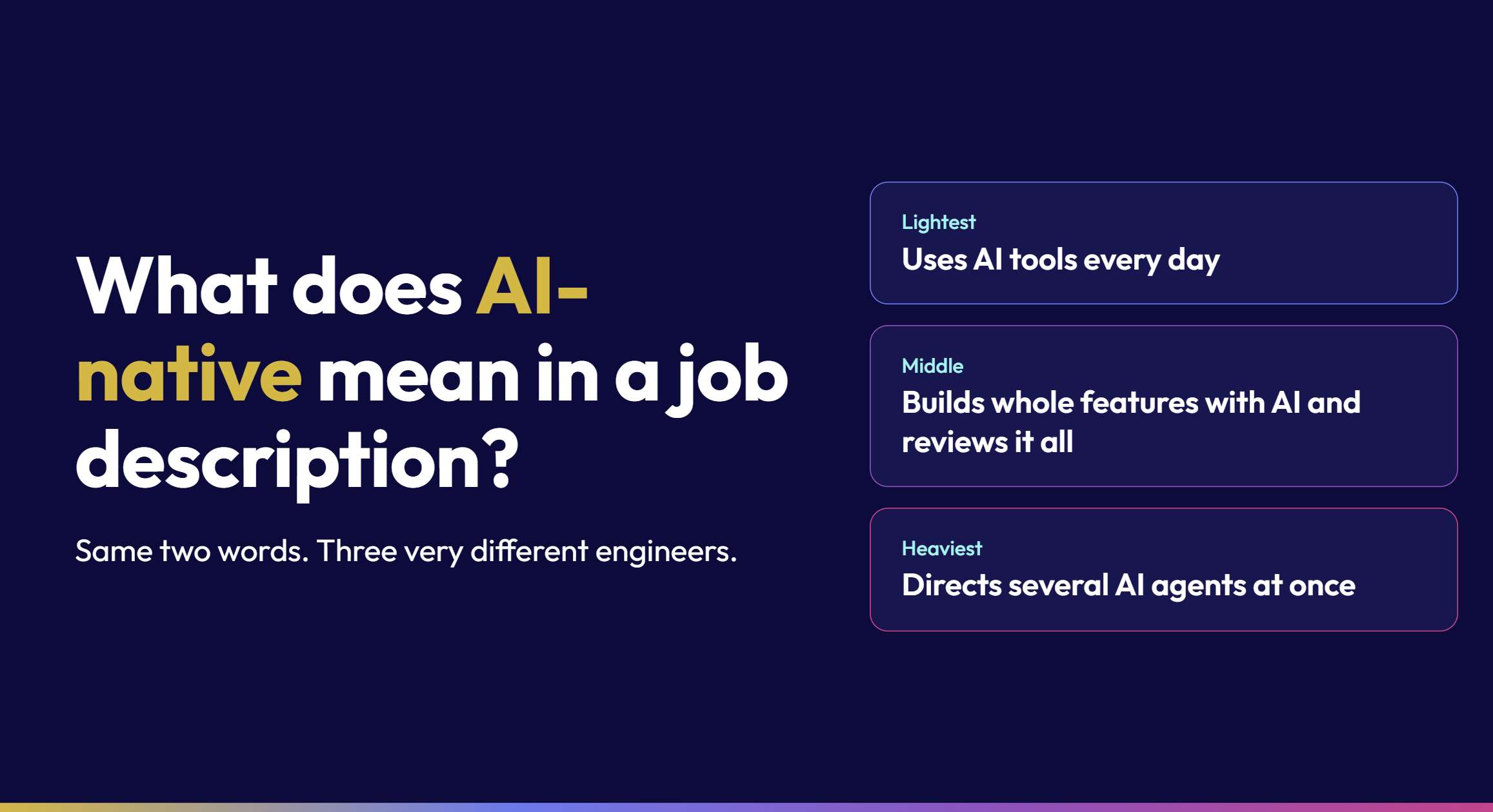
What does AI-native mean in a job description?
Back to BlogsQuick answer: In most UK job ads, “AI-native” means the company wants someone who uses AI tools as a normal part of how they work every day, not now and then. In practice it can mean anything from “uses Copilot” to “directs several AI agents and rarely writes code by hand.” Many of the companies writing it haven’t decided which one they mean. If you’re hiring, define it before it goes in the spec. If you’re applying, ask.
Where has the term “AI-native” come from?
It started as a way to describe companies. An AI-native company was built around AI from day one, compared with an older company that added AI tools later. Over the last year it has drifted onto people, and now it turns up in job titles and job descriptions, a bit like “digital native” did fifteen years ago.
The problem is that it’s moved faster than anyone has agreed on a definition. Two job ads can both say “AI-native” and be asking for very different people.
What do companies usually mean by an AI-native engineer?
From the job specs and briefs we see, it usually means one of three things.
The lightest version is an engineer who uses AI tools every day to write code, write tests and debug, and is comfortable doing so. Most competent engineers in the UK can say yes to this one.
The middle version is someone who plans and builds whole features with AI, then reviews everything it produces before it goes anywhere near production. Their way of working has properly changed, not just sped up.
The heaviest version is someone who directs several AI agents at once, spends most of their time on planning and review, and builds the setup the AI works in: the documentation, rules and workflows that make it do a better job next time. These engineers are rare and expensive.
What all three share is a split of the work. The AI does more of the doing. The engineer does the deciding, the checking and the thinking about what’s worth building.
Should you put “AI-native” in your job description?
Only if you can explain what it means in your team. If you can’t, leave it out.
Used vaguely, it does two bad things at once. It attracts everyone who has ever asked ChatGPT a question, and it puts off strong engineers who work for banks, defence firms or other employers that restrict AI tools, because they assume they won’t qualify.
Describe the work instead. Rather than “We’re looking for an AI-native engineer,” try something like “You’ll use AI tools to plan, build and test features, and you’ll be responsible for reviewing everything they produce.” That tells a candidate exactly what they’re signing up for, and it tells you what to test in the interview.
How do you know if you’re an AI-native engineer?
Ask yourself a few honest questions. Has the way you work changed in the last year, or have you just added a tool? Can you say where AI tools let you down, with real examples? Do you check what they produce before trusting it? Have you changed anything about your setup, such as documentation, prompts or project rules, so the AI does better next time?
If you can answer yes with specifics, put those specifics on your CV and in your interviews. “Uses AI tools” says nothing. “Cut the time to build and test a new API endpoint from two days to half a day by planning with AI and writing my own review checklist” says a lot.
If you work somewhere that restricts AI, say so, and talk about what you’ve done in your own time. A lot of the time these roles ask for people with high agency and going out your way to learn AI is a great way to demonstrate this.
What should you ask when a job ad says AI-native?
Ask what tools the team uses and why. Ask whether AI is allowed in the technical test and how it’s marked. Ask what a normal week looks like for an engineer, and how the team reviews AI-written code.
Good companies will have clear answers. If the answers are vague, the job ad probably used “AI-native” because it sounded right, and you’ll be guessing what they want all the way through the interview process.
The short version
- “AI-native” in a job ad normally means the company wants someone who uses AI as a normal part of their work, but the level varies a lot.
- Hiring managers: only use the term if you can define it. Describing the actual work is better.
- Candidates: show specific changes in how you work, not just that you “use AI.”
If a company can’t tell you what they mean by it, they probably haven’t decided.
Avanti has recruited engineers across the UK since 2009, for startups, scale-ups and established tech firms. If you’re writing a job description for an AI-native role and want a second opinion on what you’re really asking for, or you’re hiring and want a view on salaries and availability, contact David Smith at D.Smith@avantirec.com or +44 (0)7447 197860.
13
11
2026
Nobody knows how to hire right now, so we asked four founders what they're doing
Regardless of what you think of AI it is safe to say that it has completely changed the job market and how companies hire. There isn't a settled playbook on how to interview or how to hire which can make it hard for everyone. So we asked four peop
11
11
2026
How to hire data centre engineers in the UK when AI hardware keeps changing
A data centre takes years to plan, approve and build. The AI hardware that goes inside it changes every year or two. NetZero Events asked the obvious question in a recent piece: are we building for AI that won't exist? Their answer for the buildin
04
11
2026
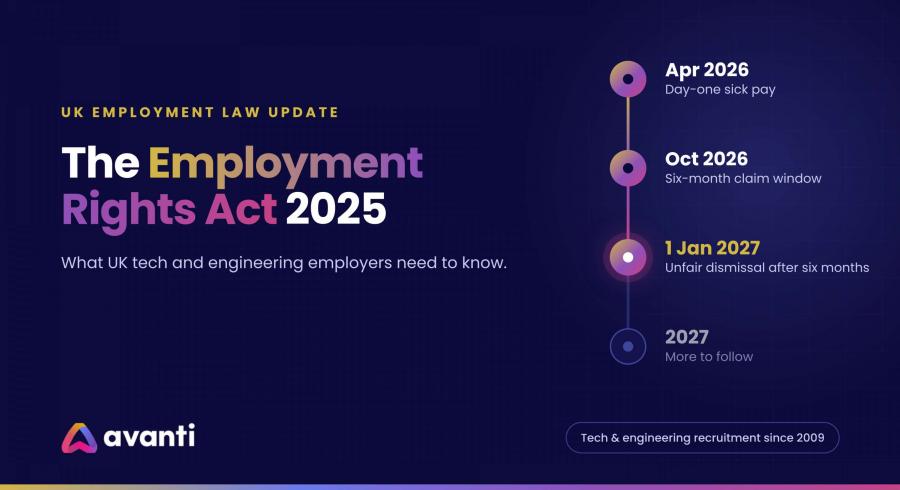
What is the Employment Rights Act 2025?
The Employment Rights Act 2025 is the biggest change to UK employment law in decades. It became law on 18 December 2025 and strengthens worker protections across sick pay, family leave, unfair dismissal, harassment, zero-hours contracts and enforceme