17
11
2026
By Eve Painter
How to hire data centre engineers in the UK
Back to BlogsHiring a data centre engineer in the UK is harder than it was two years ago. There are far more data centres to staff than there were a few years ago. AI investment means 29 UK projects were due to start in 2026 alone, with another 246 in the pipeline. The existing workforce is ageing, and most operators are recruiting from the same small pool of people who already work in data centres. The companies that hire well are clear on which skills the role really needs, open to engineers from other critical industries, and quick to make offers.
What does a data centre engineer do?
The title covers two different jobs.
Facilities engineers look after the building: power distribution, UPS and generators, cooling, fire suppression and building management systems. Titles include critical facilities engineer, M&E shift engineer, electrical or mechanical engineer, BMS engineer and commissioning engineer. Most are time-served electricians or mechanical fitters, and many work shifts.
IT-side engineers look after what sits inside the racks: servers, storage, cabling and networks. Titles include data centre technician, network engineer and infrastructure engineer.
Most of the current shortage is on the facilities side.
Why is it so hard to hire data centre engineers?
Demand has grown faster than supply. Planned UK data centre capacity quadrupled in a year, from 2GW in 2025 to 8GW in 2026, and the government's AI Growth Zones are adding more. More than half of operators (53%) now say they struggle to find qualified candidates, up from 46% a year earlier.
Supply is shrinking at the same time. Up to half of today's data centre workforce could retire by 2030, and the electrical and mechanical engineers who could replace them are also wanted by defence, energy and industrial projects.
What qualifications should you look for?
For facilities roles, the qualifications that matter most are:
• A recognised electrical or mechanical apprenticeship or equivalent (NVQ Level 3 or above)
• 18th Edition wiring regulations for electrical roles
• HV or LV Authorised Person status for anyone switching on site. This is often the single biggest factor in pay
• F-Gas certification for engineers working on cooling plant
Data centre specific courses are useful but rarely essential. Experience of working safely on live critical systems matters far more than a certificate.
Do you need someone with data centre experience?
Some operators insist on it, which is why the same few candidates get multiple offers. Uptime Institute's staffing research found operators were three times more likely to recruit from other data centres than from other mission-critical industries.
Engineers from nuclear, defence, pharmaceutical manufacturing, hospitals, rail, power generation and the armed forces already work on high voltage systems, follow permit-to-work procedures and understand redundancy. With a few months of site familiarisation they can do the job well. Senior roles running live hyperscale sites are the main exception.
How much does a data centre engineer cost?
Permanent salaries for critical facilities engineers typically sit between £50,000 and £60,000 basic, with shift allowance on top. Data centre managers usually earn £60,000 to £85,000.
What should you ask in an interview?
• Walk me through a planned shutdown you led. What did the method statement cover?
• Tell me about a failure on shift. What did you do in the first ten minutes?
• When have you stopped a job because something wasn't safe?
• How do you hand over to the next shift?
Strong candidates answer with specific detail and talk about process and safety before speed.
How Avanti can help
Avanti recruits electrical, mechanical and infrastructure engineers across the UK, including candidates from nuclear, defence and manufacturing who are well suited to data centre work. We typically get a first shortlist to clients within a few days.
To talk about a data centre role, contact Cameron Davis on C.Davis@Avantirec.com or 07576 544139.
13
11
2026
Nobody knows how to hire right now, so we asked four tech leaders what they're doing
Regardless of what you think of AI it is safe to say that it has completely changed the job market and how companies hire. There isn't a settled playbook on how to interview or how to hire which can make it hard for everyone. So we asked four peop
11
11
2026
How to hire data centre engineers in the UK when AI hardware keeps changing
A data centre takes years to plan, approve and build. The AI hardware that goes inside it changes every year or two. NetZero Events asked the obvious question in a recent piece: are we building for AI that won't exist? Their answer for the buildin
04
11
2026
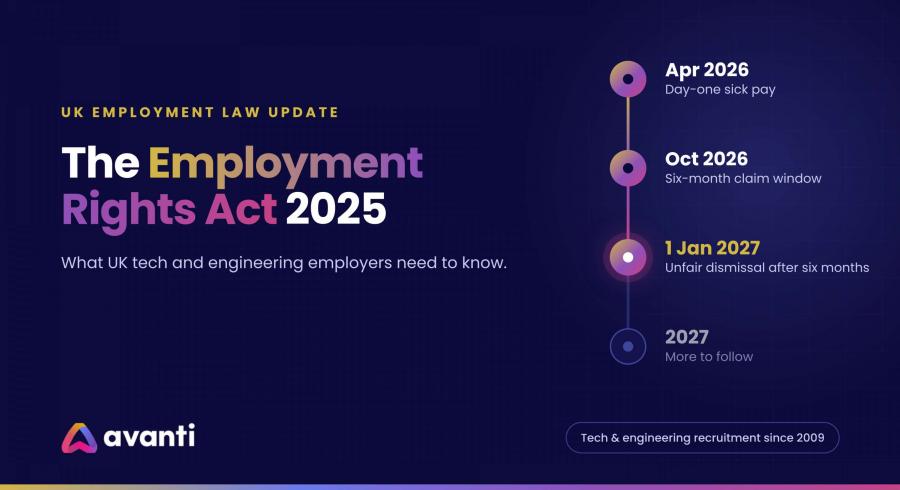
What is the Employment Rights Act 2025?
The Employment Rights Act 2025 is the biggest change to UK employment law in decades. It became law on 18 December 2025 and strengthens worker protections across sick pay, family leave, unfair dismissal, harassment, zero-hours contracts and enforceme