17
07
2026
By Eve Painter
Technical interviews don't work. They never did.
Back to BlogsGoogle measured whether their interview scores predicted job performance. They found almost no correlation & they never published the results.
That story comes from Steve Yegge, who's spent 35 years inside the hiring processes at Amazon and Google, and just wrote an article pulling it all together. His conclusion is pretty simple: technical interviews don't work and it seems they never did. We enjoyed his analysis and wanted to share the key highlights.
The data
Google actually tried to measure how well their process worked and the results weren't great. Two experienced interviewers and the same candidate, one says strong hire, the other says no.
They also found plenty of other things: unconscious biases, hiring based on whether the interviewer liked the person, a process that consistently turned away candidates who went on to do excellent work elsewhere. Some of Google's best performers had failed their interviews four or five times before eventually getting in.
They never published the results internally. That tells you something.
The time they accidentally rejected themselves
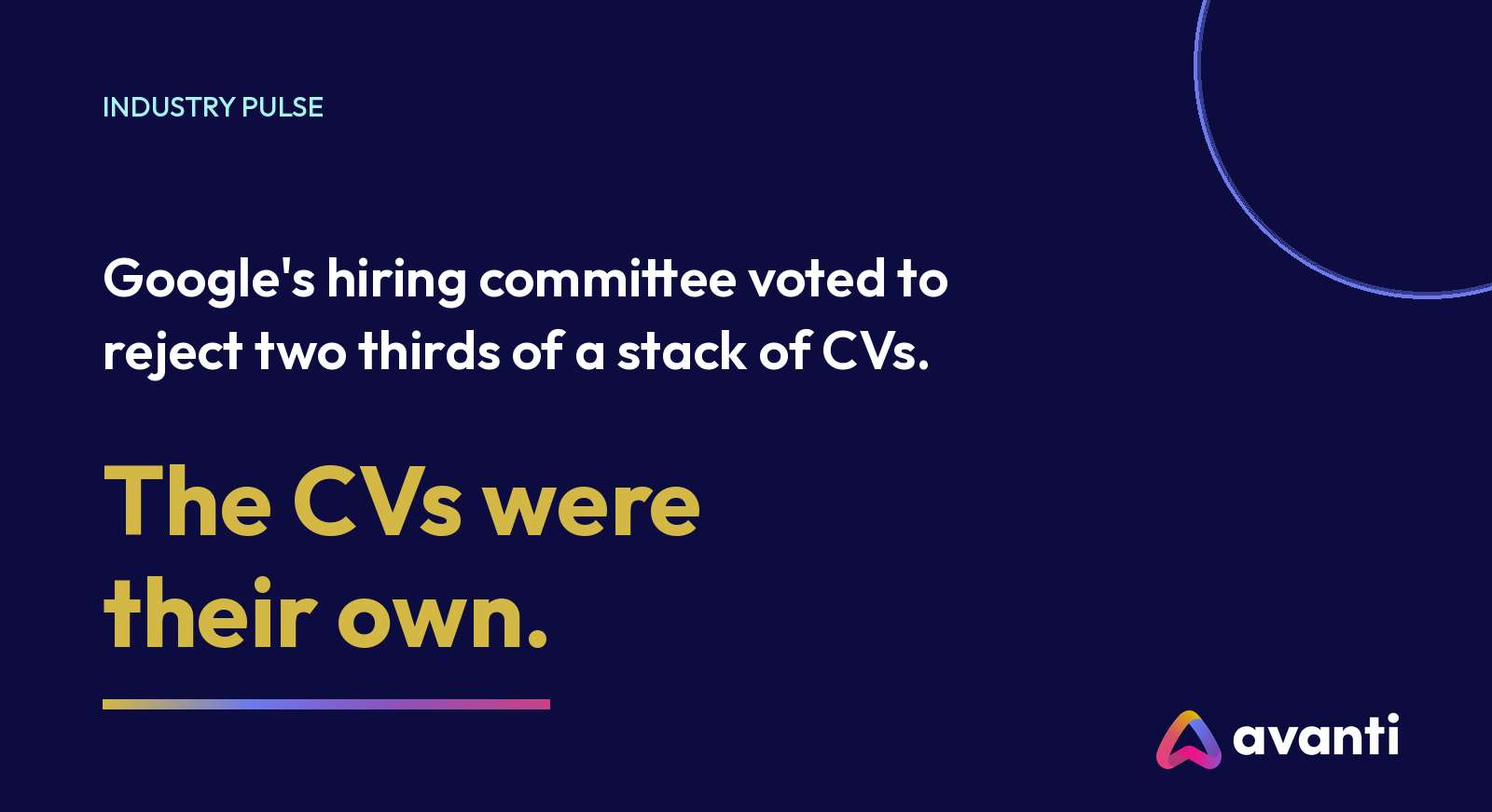
This part stuck with us the most. Google's hiring committee, senior engineers, co-inventors of major technologies, people who literally wrote books on interviewing, were given a set of mystery CVs to review and vote on. A calibration exercise, they assumed.
They voted to reject roughly two thirds of them.
The CVs were their own. The recruiters had pulled everyone's original interview records and fed them back through the process. The hiring committee had collectively decided not to hire most of the people already sitting in the room.
They didn't fix it after that either.
Fifty years and counting
What strikes us about Yegge's piece is how long this has been understood. The fundamental interview model, a handful of one-hour conversations designed to simulate working with someone, hasn't materially changed in about half a century. There have been Bar Raisers at Amazon, Hiring Committees at Google, competency frameworks, and structured debriefs, but nobody touched the underlying model.
Part of it is old habits & part of it is that the people defending the process are the same people who got through it. Questioning the interview is questioning them.
The fix: stop simulating work
Yegge's argument is that the gold standard has always been obvious but inconvenient. Internships and co-ops generate far better evidence than any interview because they're not simulating work, they're actually doing it. The closer you get to real problems, real codebases and real teams, the clearer it is who can do the job.
He points to an emerging model he calls "campfire" hiring, bringing candidates in for paid, short-term work on something real. Candidates walk away with something tangible whether or not they get an offer, and companies get data on how well candidates actually work.
It won't work for everyone overnight but the direction of travel is clear.
The comments are worth a read too
One that stood out: a former C-suite leader who used what he called a "Feat of Strength" task. Candidates pick from a list of deliberately fun, playful problems, their choice of language, their choice of difficulty level. They keep the work whether or not they get the job. The interview then becomes simple: demo it, walk us through your decisions, what would you change? He found that last question alone was sometimes enough. If someone's critique of their own work is sharper than yours, you hire them.
Another one we liked was simpler. One interviewer opens every screen with the same question: what's your favourite API? Not a trick question. Just if you genuinely care about this work, you'll have opinions. You'll have used things that were great and things that were awful, and you'll want to talk about the difference. He says the blank stares tell him everything he needs to know.
Both ideas share the same logic as Yegge's campfire model: get closer to thinking, opinions and real work.
None of this is complicated. It just requires knowing what you're actually looking for before you start, which, as Yegge points out, is the part most companies miss.
Hiring managers, the full article is worth your time.
02
09
2026
The word hiring managers keep using without saying it
We talk to hiring managers every day, and the same handful of words keeps coming up: speed, urgency, progression, velocity, someone who gets on with it. Different words but same thing. What they're all searching for is high agency, someone who doesn'
19
08
2026
Most developers aren't using AI to prep for interviews. Here's what they're missing.
We've given the same four pieces of advice to about seven people this week. All of them are smart, most of them are senior in fact. Every single one responded with some version of "oh, that's actually really useful." Which is mad, given these engi
01
07
2026
Making sense of AI job titles.
We've been working in the AI space for the past couple of years, and in that time we've seen a load of new job titles, each with a slightly different meaning depending on who you ask. Recruitment at its basic is pattern recognition; so it matters