06
05
2026
By Eve Painter
How to work out what you need before hiring
Back to BlogsSomeone who's been with you for 10 years leaves. Without thinking, you go to market to hire their replacement. It feels obvious and you should know what good looks like; it was sitting opposite you for a decade. But this is often the moment hiring processes go wrong.
The question isn't who do we replace them with. It's what do we actually need now, and most companies never ask it.
Here are the questions we have spent years asking hiring managers. Answer them before you start the hiring process:
Question 1: Has the role changed?
Be honest. The person who left grew into that job over the years. They adapted as the business changed, picked up things that never made it onto a job description, filled gaps nobody formally assigned them. The role they were doing in 2026 looked nothing like the one they started in.
So write down what the role looks like today. Not what it looked like when they joined, not what the old job spec says. What does success actually look like in this position right now?
If you're a startup hiring for a role you've never had before, this question matters even more. You're not replacing anyone but you are building something from scratch, which means you need to be even more deliberate about what you're asking for.
Question 2: What genuinely cannot be taught?
Every role has a small number of things that can't be picked up on the job. Deep domain knowledge, specific technical instincts, judgment that takes years to develop. Write them down.
Now be honest about how many there actually are. Most hiring managers, when they do this exercise properly, find the list is shorter than they assumed.
Everything not on that list can be learned. So stop screening for it as if it can't.
Question 3: What does 8/10 look like and is that actually enough?
Here's a question most people don't ask: what are you willing to let someone grow into? A candidate who can do the essential things and is missing 20% of the wish list isn't a red flag. That missing 20% is what keeps them engaged, gives them somewhere to go, and stops them leaving in a year because they've already mastered everything you're asking of them.
Ask yourself: what's the version of this hire that would genuinely work, even if it isn't perfect?
Question 4: Would you pass your own process?
Look at what you're planning to put candidates through. The test, the stages & questions. Would a team member be able to sit that test and have a chance of passing?
What is the purpose of each stage of interview? Are all parties realistic on what good looks like? If not, stop here and work it out as a team, it will save everyone time later. Make sure the hiring team are coordinated on timescales. Do this at the start, not after you've lost good candidates to companies who were more organised.
Question 5: What is this actually going to cost if you get it wrong?
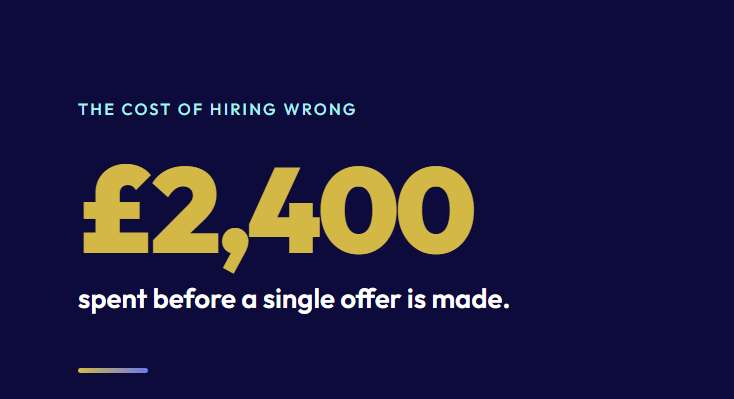
A six week process involving a hiring manager at £90k and a senior dev at £75k costs around £2,400 in internal time before a single offer is made. Start again from scratch and you're doubling that. Keep the role empty for another month and the cost is somewhere else entirely.
This is the bit most people skip and it's the most expensive thing to skip. Do the thinking first and you won't end up three months down the line with a brief that looks almost identical to the one you started with.
So before anything else, answer the five questions. If you want a second pair of eyes on the brief before you start, that's exactly where we come in. Drop us a message.
24
09
2026
How to Hire Embedded Engineers in the UK
Quick answer: Hiring embedded engineers in the UK in 2026 means competing for a small pool of specialists in a market where demand is outpacing supply. You have two routes. A permanent hire runs roughly £40,000 to £70,000 for mid to senior level, ris
02
09
2026
The word hiring managers keep using without saying it
We talk to hiring managers every day, and the same handful of words keeps coming up: speed, urgency, progression, velocity, someone who gets on with it. Different words but same thing. What they're all searching for is high agency, someone who doesn'
19
08
2026
Most developers aren't using AI to prep for interviews. Here's what they're missing.
We've given the same four pieces of advice to about seven people this week. All of them are smart, most of them are senior in fact. Every single one responded with some version of "oh, that's actually really useful." Which is mad, given these engi