25
03
2026
By Eve Painter
Junior Developer Crisis
Back to BlogsIf we asked you which degree had the worst employment rate in the UK in 2025, what would you guess?
Film studies? Art? Media studies?
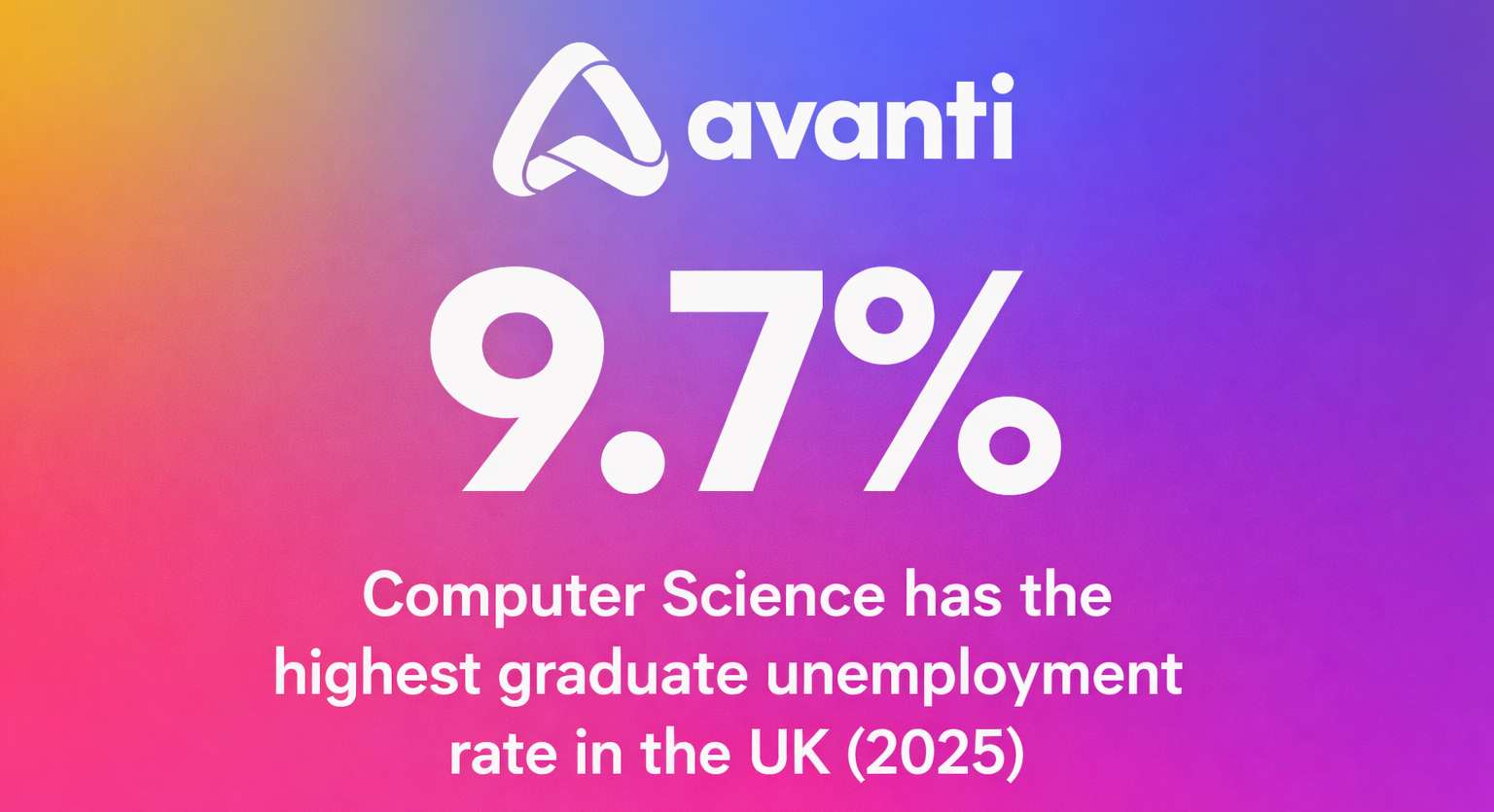
It was Computer Science. A 9.7% unemployment rate 15 months after graduating, the highest of any subject. Higher than art. Higher than film studies. Higher than every single "mickey mouse" degree people often mock.
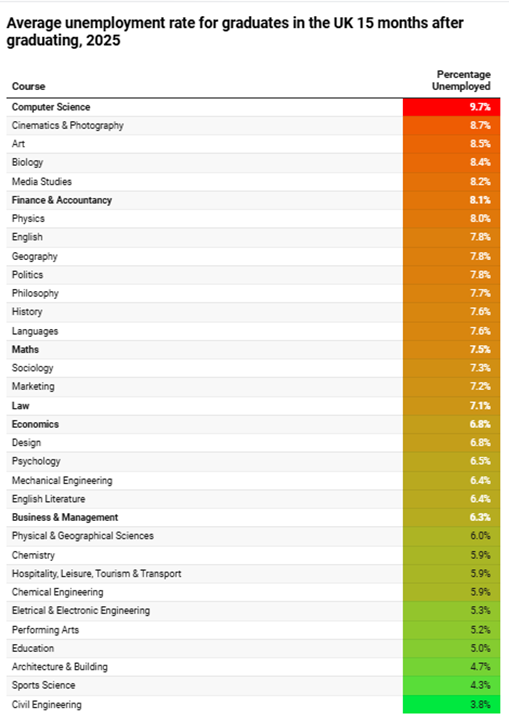
(https://www.efinancialcareers.co.uk/news/unemployment-uk-graduates)
These students did everything right. They picked the degree everyone told them to pick and they took on an average of £53,000 in debt to do it.
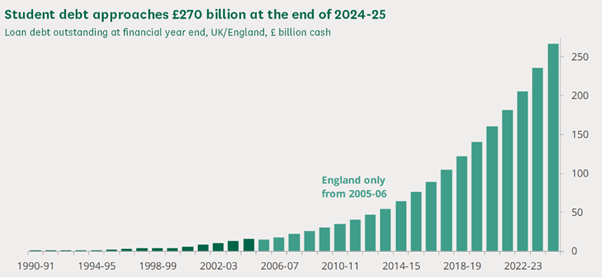
(https://commonslibrary.parliament.uk/research-briefings/sn01079/)
The market is tougher because whilst we have more people than ever trying to become software developers, the jobs aren't there to match. Rapid growth in Software Development jobs across all age ranges stopped at the end of 2022, but whilst the market has recovered for mid career and above, the headcount for early careers has fallen off a cliff.
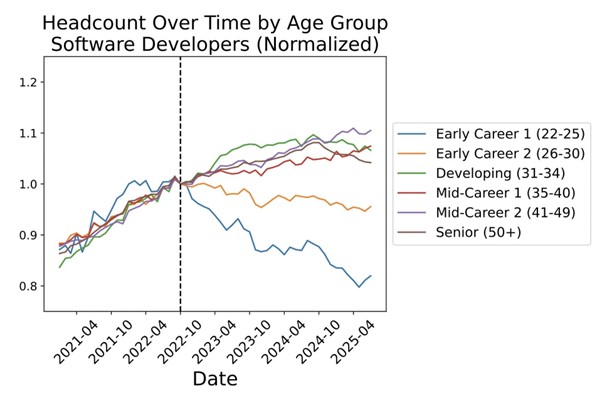
(headcount by age group chart image) (https://people-work.io/blog/junior-hiring-crisis/)
Stanford research shows early career workers (ages 22-25) in AI-exposed occupations experienced a 13% relative decline in employment. Harvard found AI-adopting firms reduced junior hiring by approximately 22% relative to non-adopters.
One graduate we’ve been working with, 1st class degree from a tier 2 Uni, very social, excellent communication skills, has passion code projects and is hard working, the kind of person who would have had multiple offers within a fortnight five years ago. He recently got to final stage at a well-known fintech. His reaction was a sigh. "It's the 5th stage. I just want a job."
That's what this market is doing to people.
And the thing that makes it worse is how companies are responding to the oversupply. Slower decisions, more interview stages and for the vast majority of candidates they get silence. According to TechTalk's latest report, 65% of candidates rarely or never hear back after an interview. 70% have been ghosted. 80% say the job search has negatively affected their mental health.
If you're a hiring manager reading this, please give feedback. It costs you very little. For a candidate who's had 30 interviews and can't figure out what's going wrong, it could change everything.
We work with companies to hire great technical talent efficiently and with integrity. But we also think it matters how you hire. Five interview stages for a graduate with no feedback or response. That's not a rigorous process, that's a broken one.
2026 looks like more of the same. These candidates deserve better, and the companies that treat them well will be the ones that attract the best of them when the market turns.
If you want to hire junior and graduate developers or just want to talk about how to build a process that works, get in touch.
02
09
2026
The word hiring managers keep using without saying it
We talk to hiring managers every day, and the same handful of words keeps coming up: speed, urgency, progression, velocity, someone who gets on with it. Different words but same thing. What they're all searching for is high agency, someone who doesn'
19
08
2026
Most developers aren't using AI to prep for interviews. Here's what they're missing.
We've given the same four pieces of advice to about seven people this week. All of them are smart, most of them are senior in fact. Every single one responded with some version of "oh, that's actually really useful." Which is mad, given these engi
17
07
2026
Technical interviews don't work. They never did.
Google measured whether their interview scores predicted job performance. They found almost no correlation & they never published the results. That story comes from Steve Yegge, who's spent 35 years inside the hiring processes at Amazon and Google