21
10
2026
By Eve Painter
How AI has changed recruitment
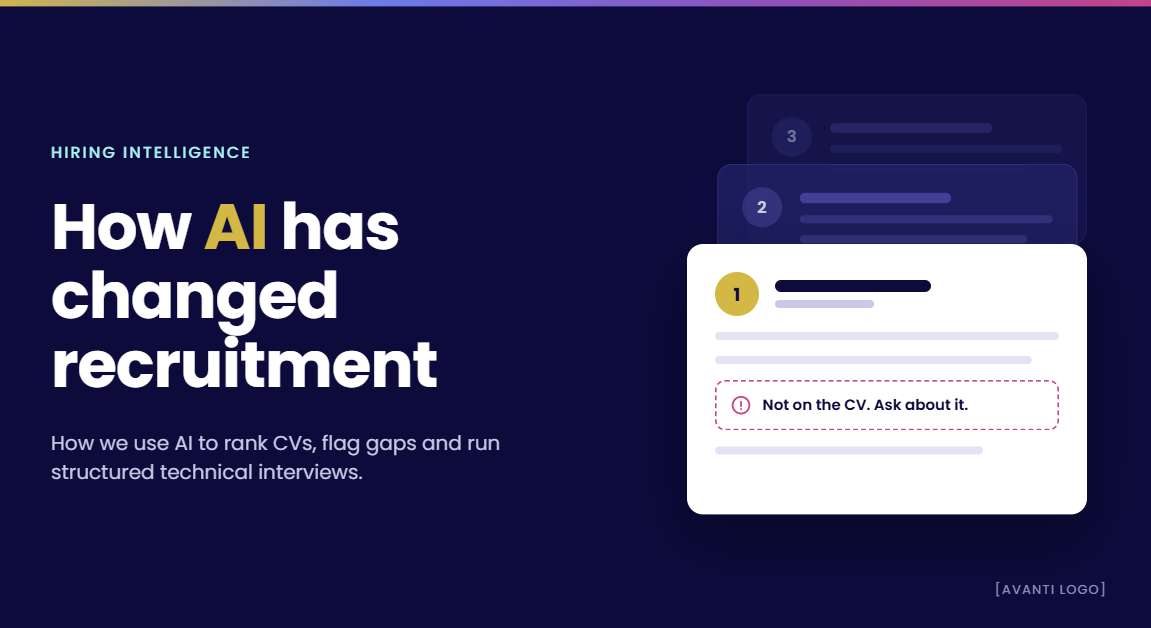
Back to BlogsAI has changed how everyone works, and recruitment is no exception. Here's how we're seeing it change things day to day.
None of it is robots deciding who gets hired. The judgement still sits with people. AI just does the legwork and gets us there faster.
Structured interviews, agreed up front
Before we send anyone to a client, we run a structured interview against the technical questions that matter for the role.
The shift is that AI can now make sense of technical answers far better than a non-specialist could before. So we can put the right technical questions to candidates and turn their answers into a clear, honest summary for the hiring manager, even one who isn't deeply technical.
For the client, that means we've already done the hard part of the first interview. It often lets them cut a stage out of their process, and in some cases skip the first-stage interview entirely, because we've run it for them.
AI to rank and prioritise, not to decide
We use AI to score and rank CVs so we get to the right people faster. On a role with a hundred applicants, that's the difference between calling the strongest candidate today and getting to them next week, by which point someone else has hired them.
The point is speed. The good candidates are still good either way. We just reach them before someone else does.
The part that matters: AI doesn't judge the CV
This is where it's easy to get it wrong, so it's worth being clear.
The AI doesn't read a CV and decide if someone is any good. A recruiter does that. What the AI does is flag what's missing. If a client needs a specific bit of experience and it isn't on the page, the AI points it out: this isn't here, ask about it. It doesn't replace the conversation, it just means we walk into it already knowing what to dig into.
Used well, AI gets you to a decision faster. It doesn't make the decision for you. The moment a recruiter lets it do that, you're back to keyword-matching, which is the thing everyone hated about recruitment in the first place.
Talk to David if you want to discuss how a structured first interview could cut a stage from your hiring process.
David.s@avantirec.com | +44 (0)7447 197860
28
10
2026
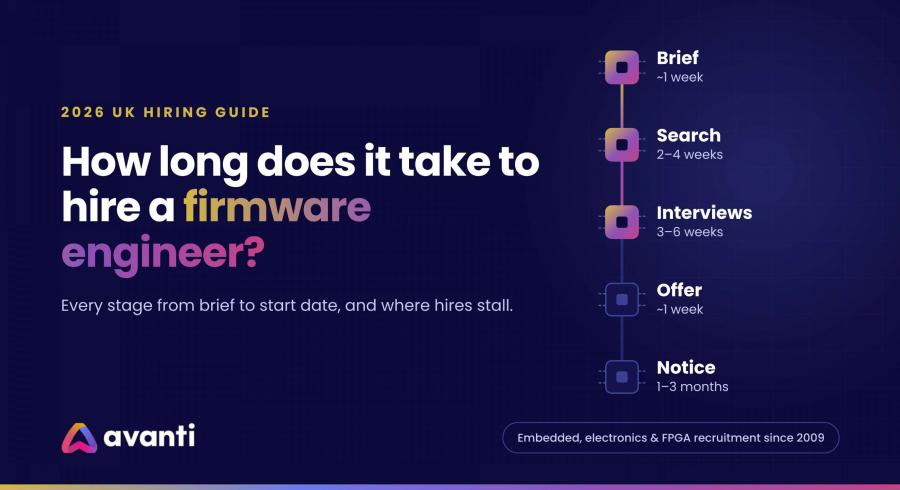
How long does it take to hire a firmware engineer?
Quick answer: Hiring a firmware engineer in the UK typically takes six to twelve weeks from brief to accepted offer. Add the candidate’s notice period, usually one to three months, and most firmware engineers start two to six months after you first d
26
10
2026
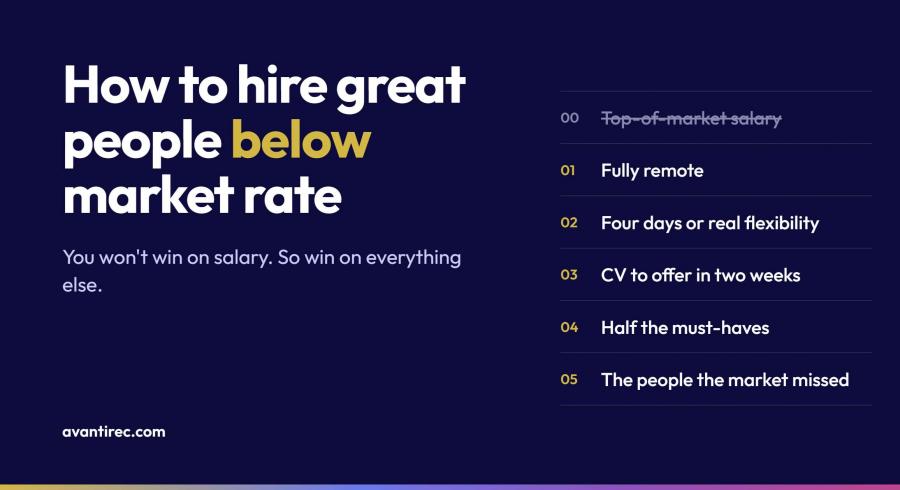
How to hire great people below market rate
Not every company can pay top of market, and the salaries up there keep climbing. That doesn't mean you can't hire great people. It means you have to win them on something other than money. These are the tactics we'd use Offer fully remote F
23
10
2026
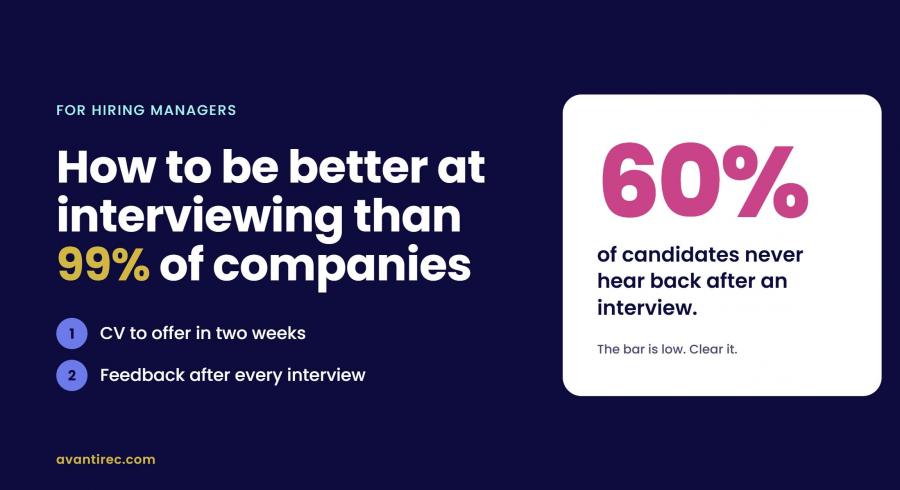
How to be better at interviewing than 99% of companies
The bar for how companies treat people in interviews is low. Around 60% of candidates never hear back after an interview at all. Surveys reckon people now find that silence more frustrating than being ghosted after a first date. That's oddly good